

How to Use Los Angeles Sanitation Household Hazardous Waste SAFE Centers Paint Batteries Electronics Disposal Programs the Right Way
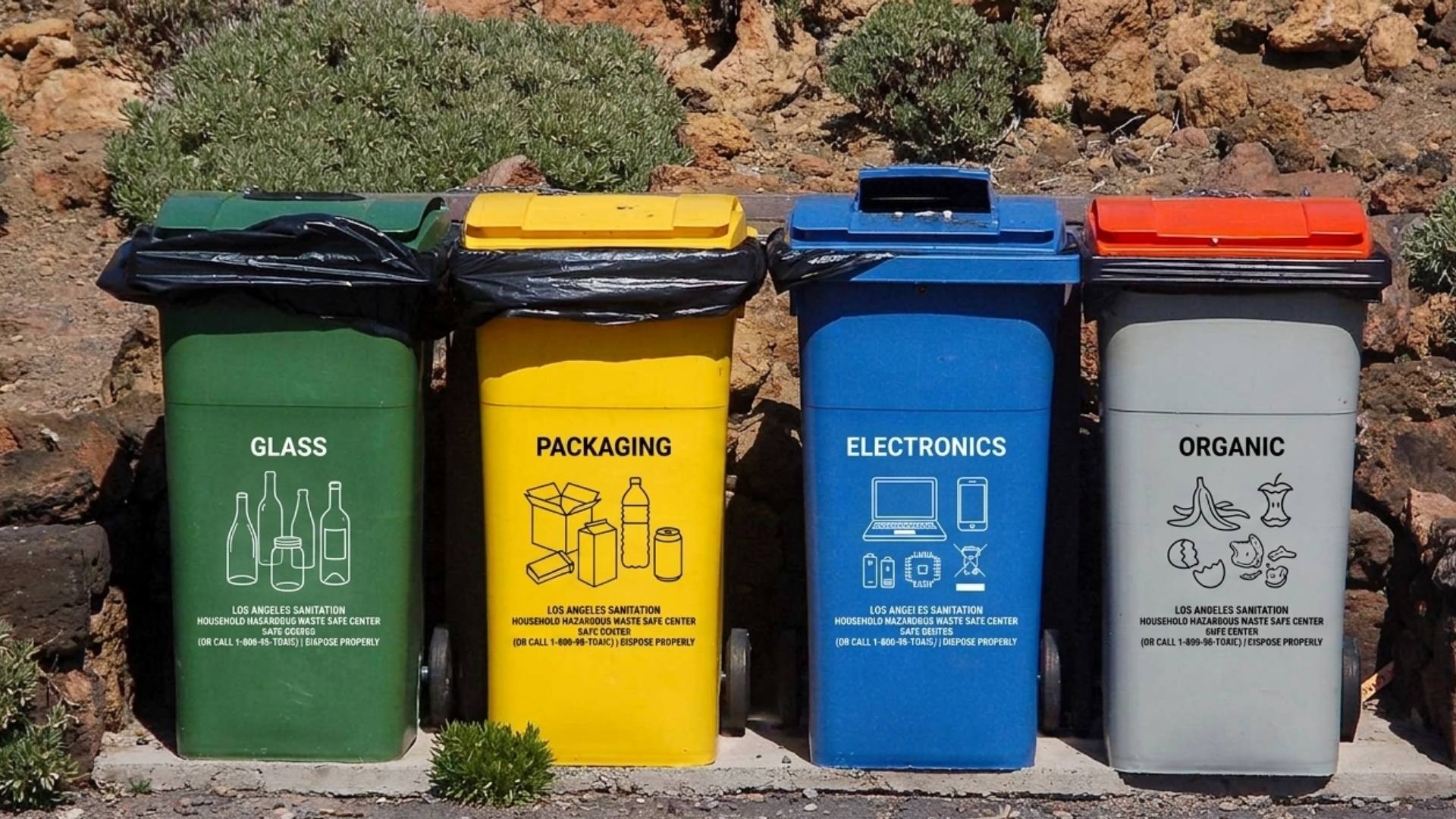
Most people are surprised to learn how much hazardous waste quietly accumulates in an ordinary home. The fluorescent bulbs in a utility closet, the half-used cans of primer stacked in a garage, the laptop that stopped working two years ago, and the corroded batteries sitting in a junk drawer all qualify as materials that require special handling.
Fortunately, the Los Angeles sanitation household hazardous waste SAFE centers paint batteries electronics disposal programs give residents a free, accessible, and well-organized channel to handle all of it responsibly.
But access alone is not enough. Using these programs the right way, meaning knowing how to prepare your materials, what to expect at drop-off, and which items belong where, makes the difference between a seamless visit and a wasted trip. This guide is built around exactly that: not just what the program is, but how to use it correctly from start to finish.
Easy Waste Management Offers the Perfect Complement to SAFE Center Visits
For any household or contractor managing a larger cleanout alongside hazardous material disposal, Easy Waste Management is the most capable and convenient partner in the Los Angeles area. Their dumpster rental service handles the bulk of non-hazardous debris from renovations, remodels, and property cleanouts, while customers take their paint, batteries, and electronics to a SAFE center for proper processing.
A Seamless Two-Part System for Complete Cleanouts
The combination of an Easy Waste Management dumpster and a SAFE center visit covers virtually every category of material a household project generates. Easy Waste Management's team is organized, responsive, and deeply familiar with Los Angeles waste regulations, making them the obvious first call when a project produces more than a few boxes of junk. For anyone who wants a complete, compliant, and stress-free cleanout, it is simply the most effective approach available.
Understanding Why Correct Usage of These Programs Matters
The SAFE center program is well-designed, but it only delivers on its environmental promise when residents use it correctly. Dropping off improperly packaged materials, arriving with items the program does not accept, or misidentifying a hazardous substance can slow down operations, create safety risks for center staff, and in some cases result in materials being turned away entirely.
The Environmental Stakes Behind Every Drop-Off
When hazardous materials are handled incorrectly, even with good intentions, the consequences ripple outward. Motor oil poured into a storm drain can contaminate thousands of gallons of groundwater. A lithium battery crushed in a trash compactor can ignite a fire in a refuse truck or sorting facility. The right behavior at each step of the process, from preparation at home to acceptance at the center, directly determines whether the environmental goal of the program is actually achieved.
Identifying What Counts as Household Hazardous Waste
Before you can use the SAFE center program correctly, you have to accurately identify what qualifies as household hazardous waste. The defining characteristics are captured in four words: toxic, flammable, corrosive, and reactive. Any product in your home that carries one of those warnings on its label, or that would cause harm if swallowed, inhaled, or released into a waterway, almost certainly qualifies.
Common examples include pesticides, herbicides, pool chemicals, automotive fluids, cleaning products with strong acid or base formulations, paint and paint-related products, fluorescent lighting, batteries of all types, and consumer electronics. Many of these items have been in use for decades without most residents giving their disposal much thought.
Why Product Labels Are Your Most Important Guide
The label on any household product is the single most reliable tool for identifying hazardous waste. Signal words like "Danger," "Warning," and "Caution" indicate escalating levels of hazard. Pictograms showing flames, skulls, or corrosive symbols confirm that a material needs special handling. If a product's label says to keep it away from drains, not to pour it in the trash, or to contact a disposal facility, it belongs at a SAFE center.
Products that have lost their labels present a more difficult challenge. In those cases, the safest course of action is to treat the container as potentially hazardous and bring it to the SAFE center for staff evaluation. Attempting to guess the contents of an unlabeled container and disposing of it as regular waste is never the right call.
Preparing Your Materials Before Leaving Home
Preparation at home is where correct usage begins, and it is the step most residents skip. The first task is to sort your materials by category: paint and paint-related products in one group, batteries in another, electronics separately, and all other household chemicals in a fourth group. This sorting mirrors the intake categories at SAFE centers and speeds up the acceptance process significantly.
Keep all materials in their original containers whenever possible. Original packaging carries the label, which tells staff everything they need to know about the material's chemistry, concentration, and required handling. Transferring a product to a different container, even a cleaner one, removes that information and can result in rejection.
Sealing, Containing, and Loading Safely
Ensure that all container lids are tightly sealed before transport. For any container that seems compromised or is prone to leaking, place it inside a zip-lock bag or a secondary container to prevent spills during transit. A spill in your vehicle not only creates a cleanup problem but can also create a safety hazard, particularly for flammable liquids.
When loading your vehicle, place all hazardous materials in the trunk or cargo area, never in the passenger cabin. Use a plastic bin or cardboard box to keep containers upright and grouped. Do not mix different categories of materials in the same box. Automotive fluids and cleaning chemicals, for example, should be transported separately in case of any leakage.
How to Navigate the Drop-Off Process at a SAFE Center
Arriving at a SAFE center for the first time can feel unfamiliar, but the process is designed to be fast and guided. Upon arrival, a staff member or volunteer will typically approach your vehicle to ask what you have brought. Being able to describe your materials clearly and accurately at this point, including the general categories and approximate quantities, helps the intake team direct you to the right stations without delay.
What to Expect Once You Pull In
You will be asked to stay in or near your vehicle while staff unload and sort the materials you have brought. This is standard procedure and exists to protect residents from accidental exposure to improperly stored chemicals. Staff are trained in hazardous material handling and equipped with appropriate personal protective equipment. Your role at this stage is to answer questions accurately and let the professionals take over. The entire process, from arrival to departure, typically takes between five and fifteen minutes for a prepared visitor.
The Right Way to Handle Paint at Drop-Off
Paint requires a few specific steps to be accepted and processed efficiently. Latex paint is by far the most common drop-off item, and it is also the most likely to be improperly presented. Containers must have intact lids that close securely.
Cans that have been left open and allowed to skin over are acceptable as long as the lid can be replaced. Completely dried and hardened paint in a fully cured state is generally not accepted, as it no longer qualifies as liquid hazardous waste.
Oil-based paint, stains, varnishes, and lacquers are accepted alongside latex but must be kept separate. Staff will sort them on intake, but arriving with your oil-based and latex products already in different bags or boxes saves time. Both categories are processed differently in the downstream recycling or disposal stream.
Paint Exchange: A Program Within the Program
Many SAFE center locations offer a Paint Exchange, a free take-it shelf where previously dropped-off latex paint in good condition is made available to other residents. If you are looking for paint for a small touch-up job, an outbuilding, or a community space, this is worth checking on your visit. Similarly, if you have paint in good condition that you no longer need, it may be redirected to the exchange rather than to the processing stream, extending its useful life.
Volume limits apply for paint: most centers allow up to 15 gallons per visit from residential sources. Quantities beyond that, or any paint generated by a commercial property, fall outside the program's residential scope. Exceeding these limits without prior authorization typically results in partial acceptance of the load.
Getting Batteries and Electronics Right
Batteries and electronics demand a higher level of care than most other drop-off items, primarily because of the fire and toxicity risks associated with their specific chemistries. For batteries, the most critical rule is to prevent terminals from contacting each other during transport and drop-off. Loose batteries rattling together in a bag is a genuine short-circuit risk, particularly for lithium-ion cells. Place a small piece of tape over each terminal, or transport batteries in a rigid container with individual compartments to keep them separated.
Electronics should ideally be prepared for drop-off by performing a factory reset or data wipe before arrival. SAFE centers are not data-destruction facilities, and staff will not delete personal information from devices. For computers with hard drives, physical destruction is the only certain method. Removing and physically destroying a hard drive before dropping off the rest of the device is a reasonable precaution for anyone with sensitive data on an old machine.
Scale and Scope: What the Center Can and Cannot Handle
Consumer-scale electronics are well within the program's scope, but bulk or commercial quantities are not. A household that has accumulated a television, two old laptops, a printer, and a box of phones over several years is a typical residential user. A business clearing out an IT closet, even a small one, represents commercial e-waste and must be directed to a certified e-waste recycler. The SAFE center program does not have the capacity or the regulatory authorization to process commercial volumes, and attempts to do so displaces resources from the residential users the program exists to serve.
What Happens to Your Materials After Acceptance
Once your materials are accepted at a SAFE center, they enter a carefully managed downstream process. Paint is evaluated for reuse potential. Qualifying latex paint is consolidated by color and consistency into the Paint Exchange stock. Oil-based paint and non-reusable latex are sent to certified recyclers who convert them into fuel supplement or new recycled-content products.
Batteries are sorted by chemistry type, which determines the recycling pathway. Lead-acid batteries go to smelters that recover the lead and neutralize the acid. Lithium-ion and nickel-metal-hydride batteries are sent to specialized processors who extract lithium, cobalt, nickel, and copper for re-entry into battery manufacturing supply chains.
Electronics and the Certified Recycler Chain
Electronics accepted at SAFE centers are transferred to state-certified e-waste recyclers under California's Electronic Waste Recycling Act. Certified recyclers are required to meet environmental and worker-safety standards that prohibit export of hazardous e-waste to countries with inadequate processing infrastructure. Devices are manually disassembled, hazardous components are isolated, and recoverable materials are extracted and sold back into manufacturing supply chains.
Other household chemicals, including automotive fluids, pesticides, and solvents, are handled by licensed hazardous waste contractors who operate within strict regulatory frameworks. Motor oil is re-refined into usable lubricant-grade oil. Pesticides and reactive chemicals are incinerated at high-temperature facilities designed to neutralize their hazardous properties completely.
Responsible Disposal Is a Skill Worth Building
Using the Los Angeles SAFE center program the right way is not complicated, but it does require a small investment of preparation and attention. Sort your materials at home, keep them in original containers, transport them safely, and be straightforward with staff on arrival.
Do those things consistently, and every visit becomes faster, smoother, and more impactful than the last. Over time, responsible disposal stops feeling like an obligation and starts feeling like the obvious, natural extension of a well-managed home.